Public schools are essential social infrastructure, vital to democratic life just as healthcare, justice systems and transportation are. As we find ourselves in an era of polycrisis – the convergence of economic instability, geopolitical conflicts, and climate pressures – the societal demand on public schooling intensifies.
And yet, terms like “polycrisis” risk casting the world as irreparably bleak. As educators, we know this is not the full story. We see, time and again, how the condition of our inner lives shapes the worlds we create, and how our individual gifts can bring light and possibility to our shared work. If community is the sharing of gifts, then we thrive through our interconnectedness.
In his seminal work Democracy in America, Alexis De Tocqueville wrote about the need to understand that “private interest is bound up with the interest of all”. Throughout history, education’s role has been to draw people back into shared life. This noted, the BC Mandate for Public Schooling, established in 1989 and unchanged since, is individualistic in its approach. It falls short by not recognizing that education, at its core, is deeply relational. Education asks us not only what we know, but who we are with and for others. It invites a continual reflection: How do I understand myself in relation to the communities I am part of? And, in doing so, returns us to that central question: what kind of education for what kind of world?
Teachers are at the heart of this question. Day by day, teachers shape the conditions that make learning possible through their attention to students, to relationships, and to the small decisions that accumulate over time. Teachers read the room, adjust, support, and challenge. Much of what teachers do is not easily measured, but it matters. In a time that can feel unsettled, their consistency and care provide stability for students, families and for one another. This work is demanding, and it is significant. It is part of what allows schools to remain places where people can connect, grow, and find their footing.
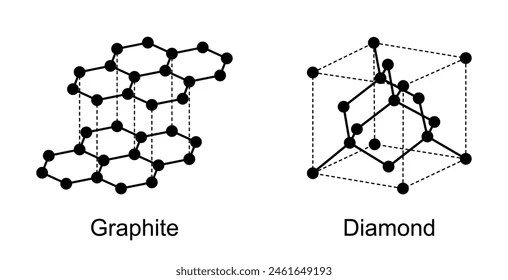
There is a metaphor I find helpful. Graphite and diamond have the same chemical identity. What differs is not their substance, but their structure, their relationships at the molecular level. Under different conditions, the same material becomes something entirely different. The same is true in education. The conditions we create, shaped by the relationships we nurture, the cultures we shape, and the care we extend, determine what becomes possible. They shape not only what students learn, but the world they come to imagine and inhabit.
In other earthly metaphors, John Abbott, Director of The 21st Century Learning Initiative, said “Society is an ‘aggregate’ (something formed from a mass of loosely connected fragments) of people living together in more or less orderly communities, held together through its own natural, organic procedures….Being an aggregate is society’s strength; or, put another way, society is the aggregate of what people think for themselves. Through the sharing of our thoughts we come to appreciate the diversity and the collective of society as a whole… and are the richer for that.”
Seen in this way, schools are not separate from society but are places where this “aggregate” is continually shaped and renewed. They are spaces where young people learn not only to think, but to think with others, to encounter difference, and to participate in shared life. In doing so, they echo the question that runs through this work: what kind of education for what kind of world?
Canadian human rights activist and international human rights lawyer Alex Neve writes, “there are times when what matters most is conviction and showing up for humanity”. We find ourselves in such a time. Educating young people in the midst of converging pressures means that the work before us is to intentionally structure environments where students, staff, and communities can flourish. The task before us is not simply to respond to the world as it is, but to help shape the conditions for the world we want to live in. Public education remains one of the most powerful places to do that work, together.
 What Kind of Education for What Kind of World?
Leave a comment